
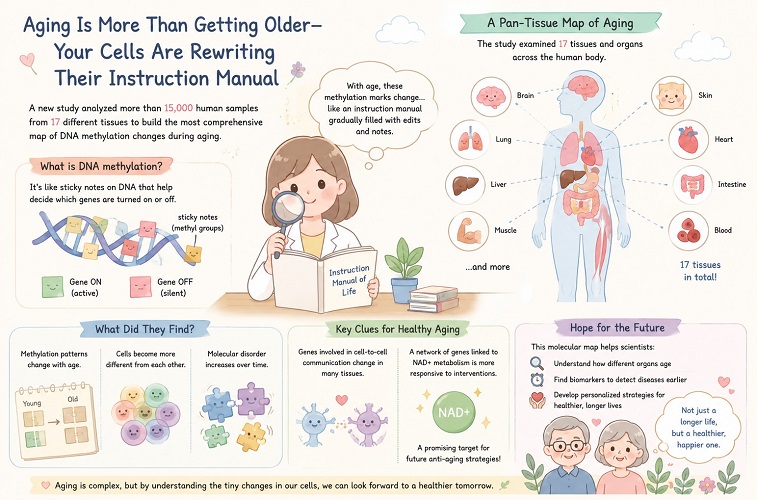
Why do some people stay healthier than others, even when they are the same age? Scientists now believe that the answer lies not only in our genes but also in DNA methylation, a process that acts like sticky notes on our DNA. These chemical tags help control which genes are turned on or off, and they gradually change as we grow older.
A recent study published in Nature Aging analyzed more than 15,000 human tissue samples from 17 different organs, including the brain, liver, lungs, muscles, and skin. By combining these data, researchers created one of the most comprehensive maps of DNA methylation changes during human aging.
The study found that although every organ ages in its own unique way, they also share common biological patterns. As we age, DNA methylation gradually changes, and these changes become increasingly variable from one cell to another. In other words, the molecular instructions that keep our cells functioning become less organized over time. Imagine an instruction manual that starts out neat and clear but gradually fills with edits, crossed-out notes, and handwritten corrections. This growing "molecular disorder" may be one of the hallmarks of aging.
Researchers also identified several genes involved in cell-to-cell communication that showed similar aging-related changes across many different tissues. This suggests that aging is not simply a collection of independent changes in each organ but may be driven by shared biological mechanisms throughout the body. In addition, the study highlighted a network of genes involved in NAD⁺ metabolism, which appeared to be more responsive to beneficial interventions. Because NAD⁺ plays an important role in cellular energy production and repair, it may become a promising target for future anti-aging therapies. However, these findings are still based on basic research, and much more work is needed before they can be translated into effective treatments for humans.
Perhaps the greatest contribution of this research is the creation of a detailed molecular map of human aging. This valuable resource will help scientists better understand how different organs age, identify biomarkers that can detect aging-related diseases earlier, and guide the development of more personalized healthcare strategies. In the future, discoveries like these may help us achieve not only a longer life but also a healthier and higher-quality life.
Reference:
Jacques, M., Seale, K., Voisin, S. et al. Meta-analysis of DNA methylation aging signatures in 17 human tissues. Nat Aging 6, 1501–1515 (2026).