
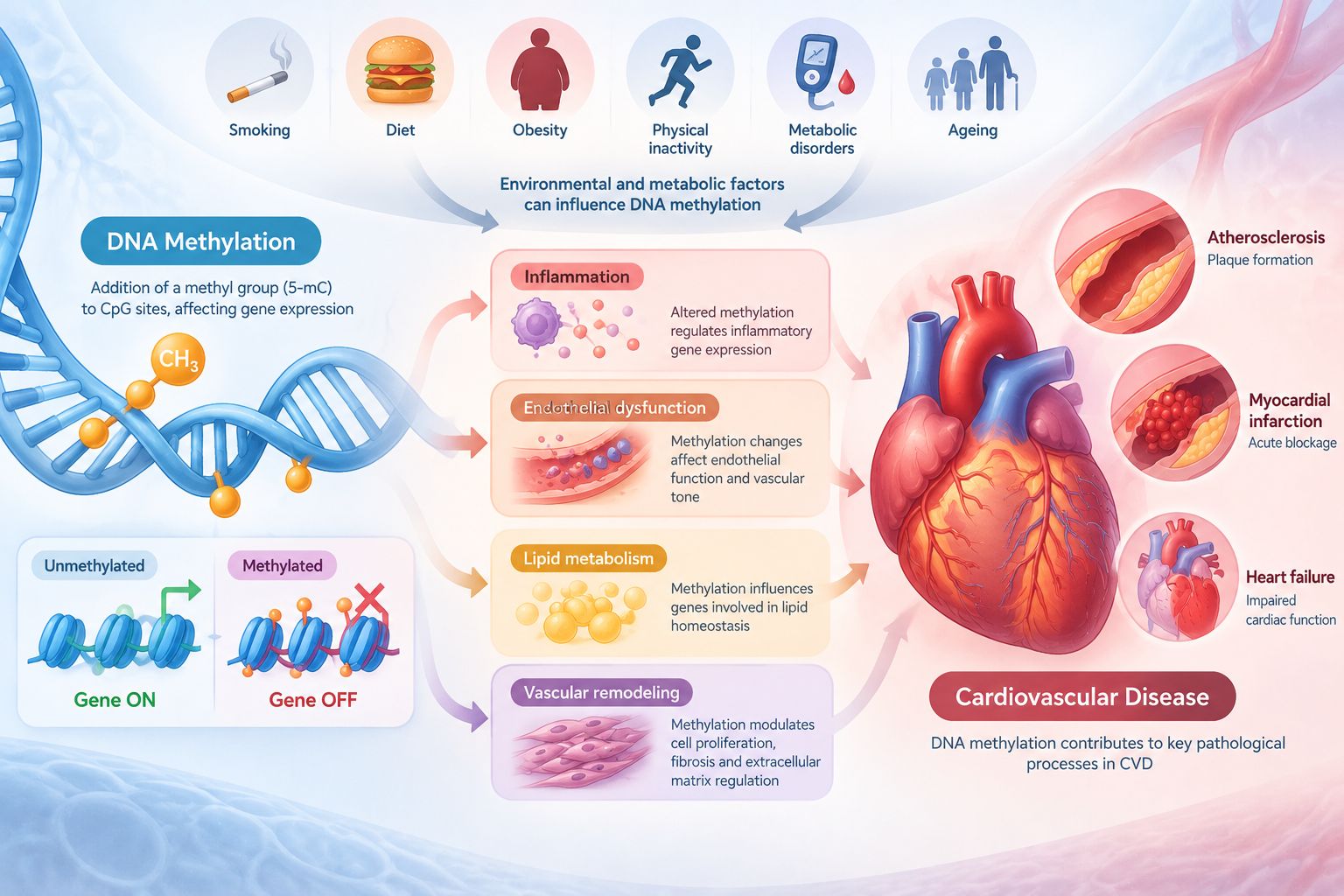
Cardiovascular disease (CVD) does not arise from a single cause. Instead, it develops through complex interactions among genetic background, aging, diet, obesity, smoking, physical inactivity, metabolic disorders, and other environmental factors. Growing evidence suggests that these factors may influence cardiovascular health not only through direct physiological effects but also by altering epigenetic regulation. Among these mechanisms, DNA methylation has received increasing attention.
DNA methylation generally refers to the addition of a methyl group to cytosine at CpG sites, forming 5-methylcytosine (5-mC). This process does not change the underlying DNA sequence but can influence transcription factor binding, chromatin structure, and gene expression. As a result, the same DNA sequence may show different levels of gene activity depending on its methylation status.
How might this be connected to cardiovascular disease? Studies suggest that CVD-associated DNA methylation changes may be involved in several important biological pathways. Altered methylation of genes related to inflammation may affect chronic vascular inflammation, while changes in genes associated with endothelial function may influence vascular tone, vasodilation, and endothelial homeostasis. DNA methylation has also been linked to lipid metabolism and vascular remodeling, potentially affecting lipid accumulation, cell proliferation, fibrosis, and extracellular matrix regulation.
Over time, disruption of these molecular and cellular processes may be associated with the development and progression of cardiovascular conditions such as atherosclerosis, coronary artery disease, myocardial infarction, and heart failure.
DNA methylation therefore provides another perspective for understanding cardiovascular disease. Disease risk may depend not only on “what the DNA sequence is,” but also on “how the DNA is regulated.” Importantly, methylation patterns can be influenced by aging, metabolic conditions, lifestyle, and environmental exposures, making DNA methylation a potential molecular link between environmental factors and cardiovascular health.
At present, these findings are primarily valuable for understanding disease mechanisms and exploring potential biomarkers. A specific DNA methylation change should not be interpreted as a single cause of cardiovascular disease or as an independent diagnostic indicator. As evidence from larger populations and longitudinal studies continues to accumulate, DNA methylation research may provide deeper insight into the complex interactions among environmental exposure, gene regulation, and cardiovascular disease.
Reference:
- Krolevets M, et al. DNA methylation and cardiovascular disease in humans: a systematic review and database of known CpG methylation sites. Clinical Epigenetics. 2023.
- Santovito D, et al. Epigenetic regulation in atherosclerosis and its therapeutic potential. Nature Reviews Cardiology. 2026.
- Zhang Y, et al. DNA Methylation in Atherosclerosis: A New Perspective. Evidence-Based Complementary and Alternative Medicine. 2021.
- Costantino S, et al. et al. New Mechanisms of Vascular Dysfunction in Cardiometabolic Patients: Focus on Epigenetics. Current Pharmaceutical Design. 2020.
- Fernández-Sanlés A, et al. Association between DNA methylation and coronary heart disease or other atherosclerotic events: A systematic review. 2017.